Health and Safety Challenge in Manufacturing
Protecting Employee Vision: An Often-Overlooked Health & Safety Challenge in Manufacturing
The Hidden Cost of Manual Visual Inspection
Dear Health & Safety Manager,
Manufacturing organizations invest heavily in machine guarding, ergonomic workstations, hearing protection, and injury prevention programs. Yet one occupational health risk often receives far less attention: prolonged visual inspection work.
For employees responsible for manually inspecting parts, components, assemblies, or packaging, visual concentration is not occasional—it is their primary task throughout the workday. Hours of repetitive close-focus inspection can place significant strain on the eyes, neck, shoulders, and cognitive system, leading to fatigue that affects both worker wellbeing and production quality.
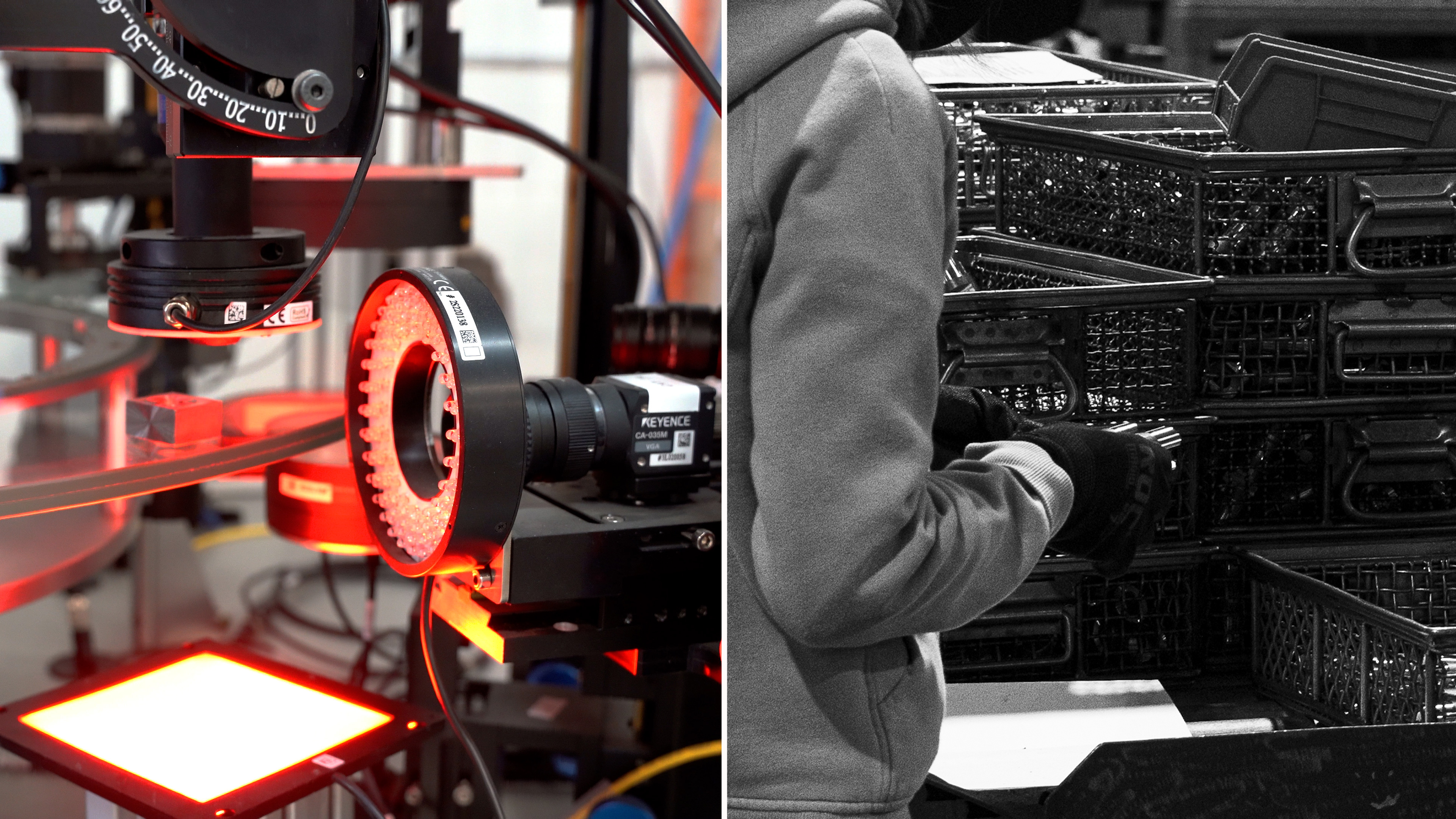
At Sorsys Technologies, we work with manufacturers across North America who depend on inspection personnel to maintain quality standards. We also see firsthand how manual inspection can create challenges for Health & Safety teams seeking to reduce workplace fatigue and improve ergonomic conditions.
The Occupational Health Impact of Visual Inspection
Visual fatigue is a recognized occupational health concern associated with sustained visual activity and repetitive focus adjustment.
Common symptoms include:
Eye strain and visual discomfort
Dry, irritated, or watery eyes
Blurred or fluctuating vision
Headaches and migraines
Reduced concentration and alertness
Mental fatigue and stress
These symptoms often worsen as a shift progresses, particularly in environments where employees inspect small features, subtle defects, or high volumes of parts.
Research conducted in manufacturing inspection environments has demonstrated a direct relationship between visual fatigue and reduced inspection performance. Workers experiencing eye strain are more likely to miss defects, experience slower inspection speeds, and report lower overall comfort levels.
Over time, repeated exposure to these conditions may contribute to chronic visual discomfort, increased stress levels, and symptoms commonly associated with Computer Vision Syndrome (CVS).
Ergonomic Risks Extend Beyond the Eyes
The impact of manual inspection is not limited to vision alone.
Many inspectors spend hours:
Leaning forward toward workpieces
Maintaining fixed head positions
Repeating similar movements
Focusing intensely on small details
These activities can contribute to:
Neck strain
Shoulder tension
Upper back discomfort
Poor posture habits
Increased musculoskeletal fatigue
When visual fatigue combines with physical discomfort, employee wellbeing and job satisfaction can suffer, potentially contributing to absenteeism and reduced productivity.
Why Health & Safety Managers Should Pay Attention
Fatigue-related risks can affect:
Quality Performance
As visual fatigue increases, defect detection accuracy may decrease, resulting in higher scrap rates, rework, customer complaints, or product escapes.
Employee Wellbeing
Workers experiencing persistent eye strain often report headaches, discomfort, and mental exhaustion that extend beyond working hours.
Operational Efficiency
Studies have shown that visual discomfort can significantly reduce productivity and increase lost working time.
Health & Safety Compliance
Many occupational health regulations require employers to identify and mitigate workplace hazards, including those related to ergonomics, repetitive tasks, and prolonged visual work.
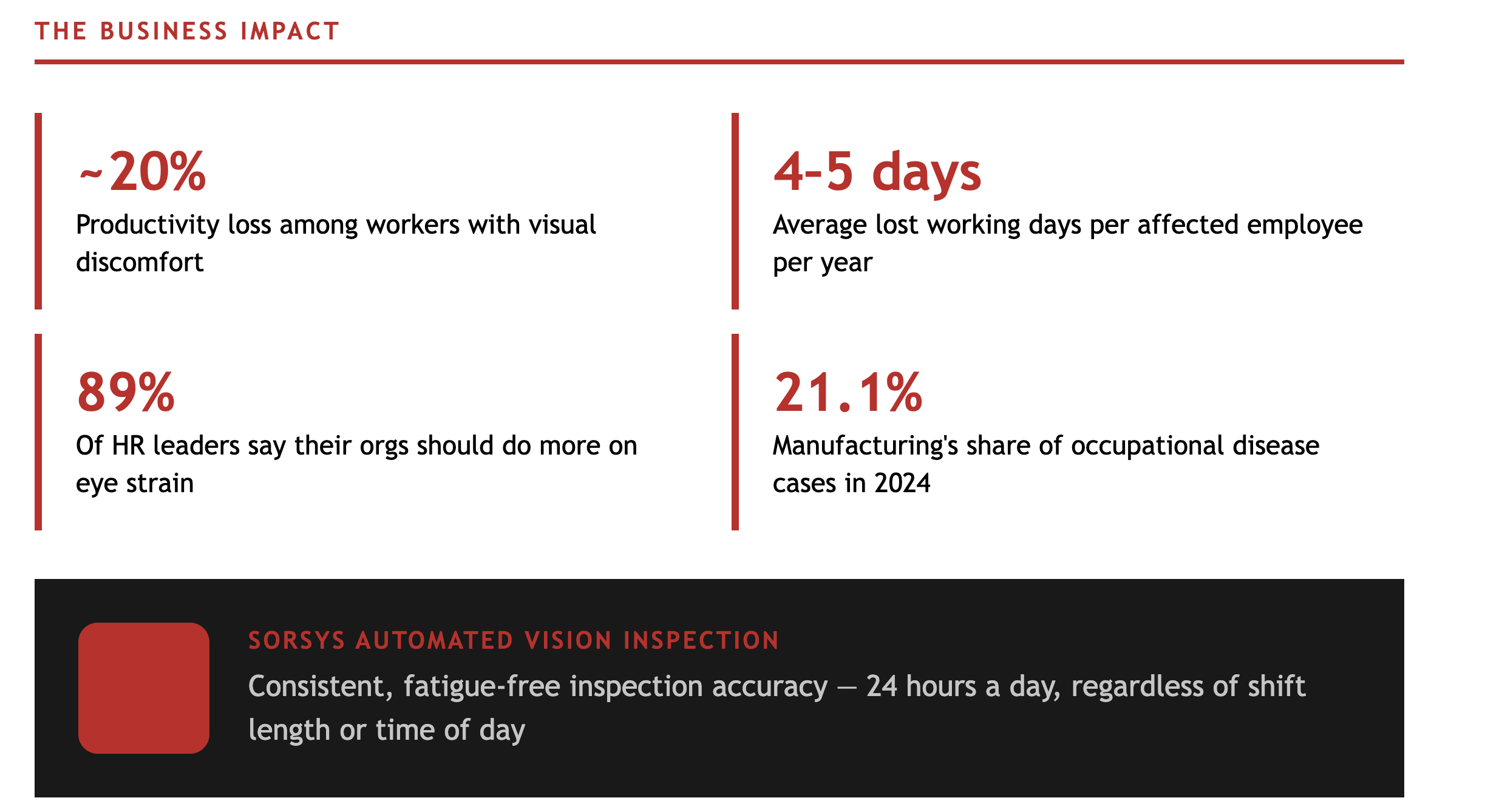
The Business Impact
Research and industry reports indicate that organizations may experience:
~20% Productivity Loss
Associated with visual discomfort and fatigue-related performance decline.
4–5 Lost Working Days Per Employee Per Year
Linked to eye strain symptoms and associated health concerns.
89% of HR Leaders
Believe employers should be doing more to address workplace eye strain.
21.1% of Occupational Disease Cases
Occurred within the manufacturing sector in 2024, making manufacturing the industry with the highest reported incidence.
A Safer Alternative: Automated Vision Inspection
Automated vision inspection systems provide a practical way to reduce employee exposure to repetitive visual inspection tasks while improving consistency and traceability.
Unlike human inspectors, automated systems do not experience:
Eye fatigue
Reduced concentration late in a shift
Performance variation between operators
Inconsistent inspection decisions
Instead, they deliver reliable inspection performance around the clock.
How Sorsys Automated Vision Inspection Supports Health & Safety Goals
Reduce Repetitive Visual Strain
Operators are no longer required to spend hours performing continuous close-focus inspection tasks.
Improve Workplace Ergonomics
Minimize prolonged leaning, repetitive posture maintenance, and visual concentration demands.
Support Occupational Health Initiatives
Demonstrate proactive efforts to reduce fatigue-related workplace risks and improve employee wellbeing.
Deliver Consistent Inspection Accuracy
Maintain repeatable inspection performance 24 hours a day, regardless of shift length or operator availability.
Redeploy Skilled Employees
Move experienced personnel into higher-value activities such as process improvement, quality analysis, machine operation, or production support.
Creating a Healthier Manufacturing Environment
Automation is often discussed in terms of productivity, quality, and cost savings. Equally important, however, is its ability to create safer and healthier working conditions.
By reducing exposure to repetitive visual tasks, manufacturers can help protect employee vision, decrease fatigue-related risks, improve ergonomics, and strengthen their overall Health & Safety program.
At Sorsys Technologies, our automated vision inspection solutions are designed to support both operational excellence and employee wellbeing.
In addition to reducing visual strain, our customers frequently report improvements in defect detection, reduced rework costs, enhanced quality consistency, and greater confidence in their inspection process.
Request a Demonstration
Discover how Sorsys Automated Vision Inspection can help improve workplace health, reduce fatigue-related risks, and enhance quality performance throughout your operation.
Contact Us